
AI In Medical Devices
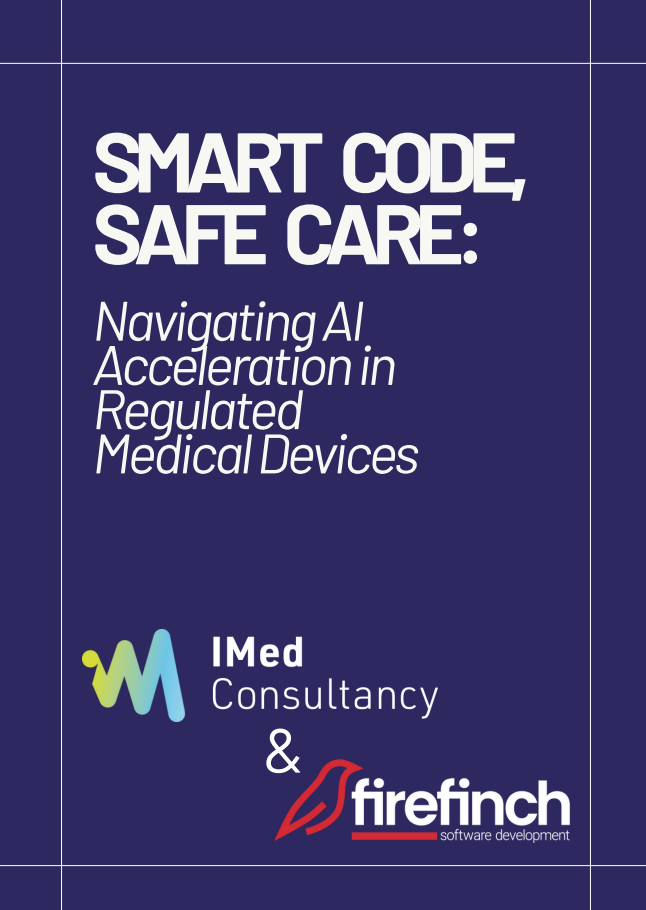
Read the excerpt from our comprehensive medical device whitepaper, written alongside IMed Consultancy, or download the full copy below.
Who we are
Specialist Software Development for Life Sciences
Firefinch is a UK-based bespoke software development company delivering custom software solutions for the most complex, regulated environments in life sciences, medtech, and digital health. From software as a medical device (SaMD) to AI-powered research workflows, we partner with innovators who need software that is precise, compliant, and built to perform.
What this whitepaper covers
- Are you really dealing with a SaMD? — how to determine whether your software or AI features actually classify as a medical device
- Evaluating your team’s skills — the compliance and software development gaps most teams face when building AI-enabled devices
- AI governance and regulation — how the UK, EU, and US are each approaching AI risk classification, and what that means for your product
- Data, privacy, and SOUP compliance — managing patient data responsibly and documenting third-party software components under ISO 62304
- Testing and validation — building the traceability and validation processes regulated AI systems require
- The global outlook — how to choose the right launch market as regulatory frameworks continue to shift
How we can help
AI is accelerating what’s possible in medical devices, but regulated healthcare doesn’t forgive a rushed rollout. Our team pairs hands-on AI and software engineering experience with a clear-eyed view of the compliance landscape, so you can innovate quickly without compromising patient safety or your route to market.
Excerpt from the whitepaper:
“The MHRA’s new framework for determining whether a Digital Mental Health Technology (DMHT) qualifies as a medical device considers intended purpose and level of functionality. The first step in qualification is assessing what the manufacturer claims the tool is designed to do. Labelling, inclusive of instructions for use and promotional materials, as well as technical documentation will need to be assessed. If the software explicitly states that it diagnoses, treats, prevents, or monitors a medical condition, it is more likely to fall under medical device regulations. Despite this, a digital device may have a medical purpose but still be excluded from regulation if its functional impact is low. This ensures that only those tools providing a clinical effect or influencing patient care decisions are classified as medical devices.“
Let’s Stay in Touch
Subscribe to our monthly newsletter below to stay up to date on evolving regulations — EU AI Act, UK MDR, IEC 62304, practical perspectives on ethical AI and compliant software development, case studies and real-world examples from our project work. Plus, regular updates on our events, training workshops and latest announcements.