
Smart Code, Safe Care: Navigating AI Acceleration in Regulated Medical Devices
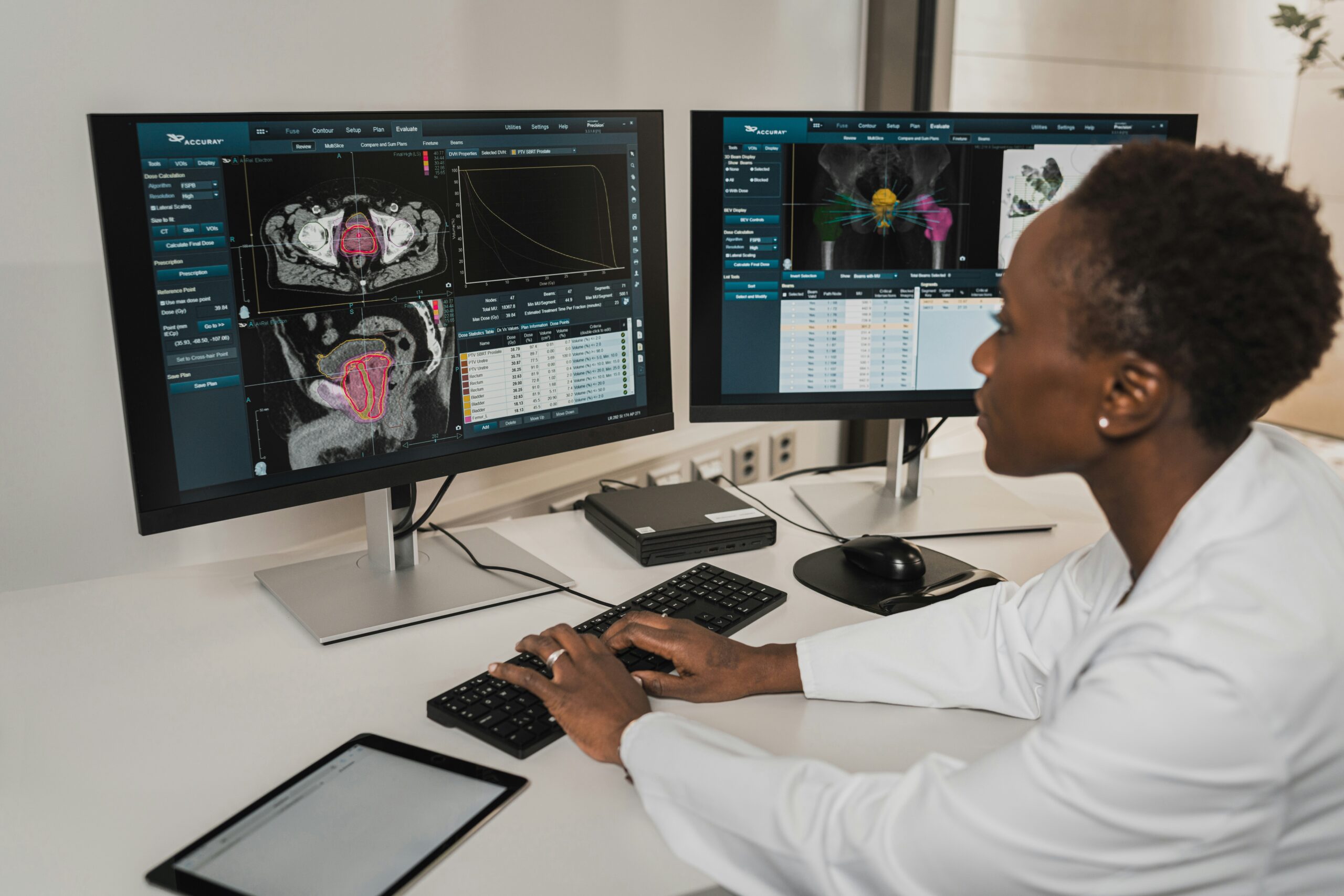
The opportunity in AI-enabled healthcare technology is enormous. The global AI in healthcare market is projected to grow from $39 billion in 2025 to over $500 billion by 20321, and manufacturers who move early stand to gain real competitive advantage: faster diagnostics, smarter monitoring and clinical decision support that adds genuine value for both clinicians and patients.
However, for medical device manufacturers taking their first serious steps into AI-enabled software, the path from prototype to compliant, market-ready product is rarely as straightforward as it first appears. The software development challenges that come with building a Software as a Medical Device (SaMD) are distinct, numerous and easy to underestimate.
What makes SaMD development different
Many established device manufacturers begin an AI integration project with a capable internal engineering team and reasonable confidence that the software side can be managed similarly to other development work. It usually doesn’t take long to discover the gap.
Consider model updates: in standard software development, retraining a machine learning model with new field data is routine practice, a normal part of improving a product after launch. In the medical sector, the same update could trigger re-validation of the entire model and require updates to your technical file. If the change is considered substantial, then the whole software may require re-validation. Another point to consider is that the dataset the model is trained on is considered part of the device, which means that data control, validation and risk will need to be evaluated as part of the regulatory approval.
Team composition is another area where expectations and reality often diverge. Delivering a compliant AI-enabled device requires ML engineers with relevant clinical context, UX designers who understand that their work carries its own compliance obligations and engineers with verification and validation experience. In addition, cybersecurity must be built into the architecture from the outset, with vulnerability analysis and penetration testing embedded in the development process, not just reviewed at the end.
The layers of complexity your software partner must handle
AI introduces challenges that go beyond what even experienced software teams typically encounter. Unlike deterministic software, AI models behave probabilistically, which makes standard validation approaches insufficient on their own. Every stage of the pipeline, from data preprocessing through to inference and output, requires rigorous scrutiny. This includes clearly defining how the system should behave when the model is uncertain, when input data quality is poor or when edge cases arise outside the training set.
There’s also the management of Software of Unknown Provenance (SOUP), the third-party libraries and components that form part of almost every modern software stack. In a medical context, every SOUP component must be thoroughly assessed, documented and monitored throughout the product lifecycle. This level of traceability and ongoing surveillance is non-negotiable and it’s where unprepared development partners often fall short.
The additional risks that AI brings to a medical device are regulated through various acts, many of which are still in development, so software teams need to ensure they are up to date. This is where regulatory consultants and specialised software development agencies can really bring value.
Getting the right support
For medical device manufacturers, choosing the right software development partner is just as important as selecting the right regulatory one.
That’s why Firefinch Software and IMed Consultancy [LINK] have joined forces to produce Smart Code, Safe Care: Navigating AI Acceleration in Regulated Medical Devices, a free white paper that brings together deep regulatory expertise and real-world SaMD software development experience to help manufacturers of all sizes get this right.
It’s written for manufacturers at every stage, from those evaluating their first AI integration to those scaling an existing SaMD, and covers team requirements, data governance, validation strategy and how to navigate the differing regulatory landscapes of the UK, EU and US.
References
1, AI in Healthcare Market Size and Global Trends
Other useful resources from Firefinch
Tech note on developing software in medical devices
Cybersecurity and AI in medical devices
💬If you’d like to discuss how AI can be safely integrated into your medical device, the Firefinch team would be happy to have a friendly, no-obligation conversation about your challenges and opportunities.
🖱️ At Firefinch we love developing the software for medical devices. Get in touch to learn more.
🖱️ Learn more about IMed Consultancy